If you’ve recently received a text message claiming you owe money for a traffic ticket or DMV issue in California, stop for a second before you click anything.
There is a good chance it is a scam.
A growing number of drivers across the United States, including California, are being targeted by fraudulent text messages that appear to come from the DMV. These messages are designed to scare you into paying a fake fine or giving up personal information.
Here is what you need to know.
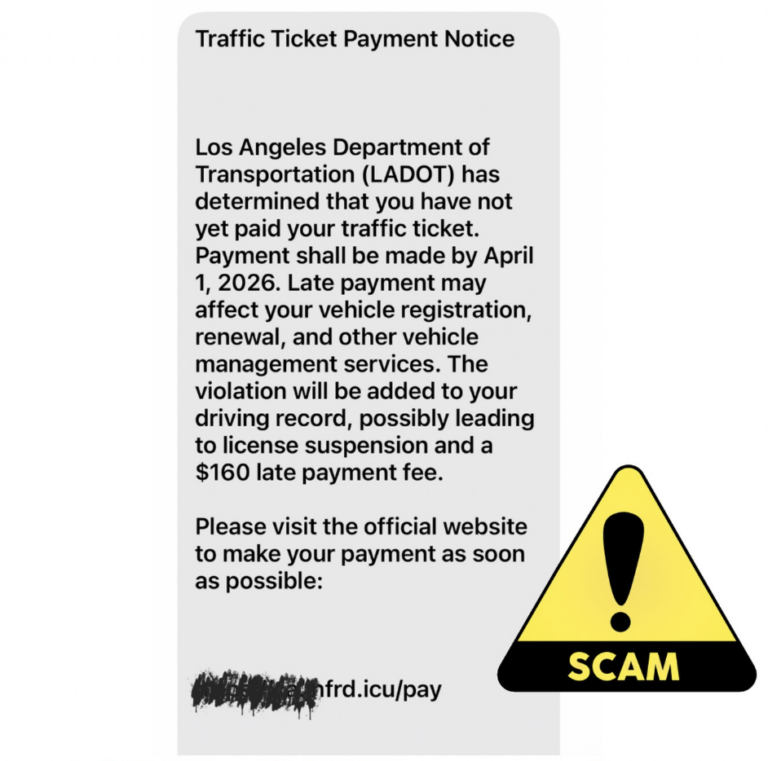
What the DMV Text Scam Looks Like
The scam typically arrives as a text message that looks official and urgent. It may say something like:
- You have an outstanding traffic ticket
- Your license or registration will be suspended
- You must pay immediately to avoid penalties
Many of these messages include threats such as license suspension, additional fees, or even legal action if you do not act quickly.
They also include a link that appears to be an official government website, but it is not. The goal is to trick you into entering your payment details or personal information.
Why This Scam Works So Well
These messages are effective because they create urgency and fear.
Scammers rely on the fact that most drivers do not want to risk:
- Losing their license
- Facing additional fines
- Dealing with legal consequences
Some messages even include fake legal codes, citation numbers, or official-sounding language to make them appear legitimate. In reality, these details are often completely fabricated.
Important Fact, The DMV Will Not Text You for Payment
This is the most important thing to understand.
State agencies such as the DMV do not send unsolicited text messages demanding payment for traffic tickets or threatening immediate penalties.
Legitimate notices about tickets or license issues are typically:
- Sent by mail
- Handled through official court or DMV websites
- Communicated through secure, verified channels
If you receive a random text demanding payment, it is almost certainly a scam.
This Scam Is Spreading Across the United States
This is not just happening in one state.
Authorities across multiple states, including California, Florida, Texas, New York, and others, have issued warnings about these types of scam messages.
Scammers are sending out mass text campaigns designed to reach as many drivers as possible. In many cases, they do not even know whether you actually have a ticket.
They are simply hoping you will panic and click.
Red Flags to Watch For
There are several clear warning signs that a DMV-related text message is not legitimate.
- Urgent language demanding immediate payment
- Threats of license suspension or legal action
- Links that do not end in a .gov domain
- Messages from random or unfamiliar phone numbers
- Requests for personal or financial information
If you see any of these, do not engage with the message.
What Happens If You Click the Link
If you click the link in one of these messages, you may be directed to a fake website designed to look like an official DMV page.
From there, scammers may attempt to:
- Collect your credit card information
- Steal your personal identity
- Install malicious software on your device
These scams are designed to move quickly, which is why they rely on urgency and pressure.
What You Should Do Instead
If you receive a suspicious DMV-related text message:
- Do not click any links
- Do not respond to the message
- Delete the text and report it as spam
- Verify any ticket directly through official channels
If you are concerned that you may actually have a ticket, go directly to your local court or DMV website. Never use the link provided in the text message.
Why This Matters for California Drivers
As enforcement technology increases, including speed cameras and automated ticketing systems, these scams are likely to become even more common.
Scammers know that drivers are already receiving legitimate notices about traffic violations. That makes it easier for them to create convincing fake messages.
This is especially important in areas like Los Angeles, where new enforcement programs are being introduced and drivers may be expecting more communication related to tickets.
The Ticket Clinic Is Here to Help
If you ever receive a message about a traffic ticket and are unsure whether it is real, it is always better to verify before taking action.
The Ticket Clinic regularly helps drivers understand their situation and determine the best next step.
If something does not look right, trust your instincts and double-check before you click.
Bottom Line
If you get a text claiming you owe money for a DMV or traffic ticket in California, assume it is a scam until proven otherwise.
Real agencies do not demand payment through text messages.
Scammers rely on urgency, fear, and confusion to get you to act quickly.
Taking a few extra seconds to verify can protect your personal information and your money.