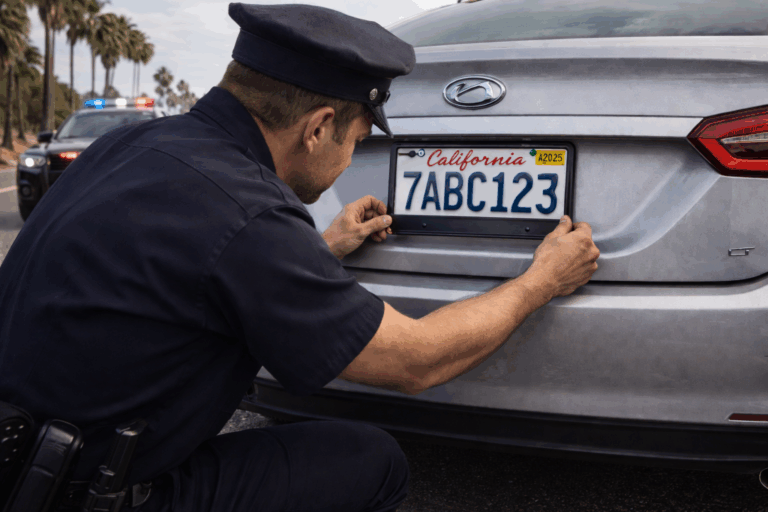
California drivers know that safety on the road matters. Every year, thousands of motorists and roadside workers are hurt or killed by passing vehicles that don’t give enough space when they are stopped on the side of the road. For years, California’s move-over law required drivers to slow down or change lanes when approaching emergency vehicles or tow trucks with flashing lights. Starting in 2026, lawmakers expanded that rule to protect a much broader group of road users.
This change reflects growing concern about roadside safety and the rising number of people struck by vehicles. According to AAA statistics, some states have seen as much as a sixty percent increase in deaths outside disabled vehicles over the last decade. California’s expanded move over law aims to reduce those numbers by making it clear that drivers have to be extra cautious anytime they come on scene of a stopped vehicle.
Below, we explain how the updated law works, what penalties you could face if you violate it, how California’s approach compares to other states, and what every driver should do to stay safe and compliant.
What Changed Under The 2026 Move Over Law
Before January 1 2026, California’s “slow down and move over” rule applied mostly to emergency vehicles such as police cars, fire trucks, and ambulances, as well as authorized roadside maintenance vehicles and tow trucks. Under the old rule, you were expected to either move into another lane or slow your speed if those vehicles were stopped on the shoulder.
The 2026 law broadens the requirement. Now drivers must slow down and move over for any stationary vehicle displaying hazard lights or warning devices such as cones, flares, or reflective triangle markers. That includes:
Disabled personal vehicles stuck on the shoulder
Delivery vehicles stopped to make a delivery
Roadside service or construction vehicles with hazard lights on
If changing into a different lane is not possible, drivers must reduce their speed to a safe and prudent level as they pass. This is meant to give maximum protection to anyone near or outside a vehicle on the roadside.
Penalties For Violating The Law
Failing to slow down or move over under the new framework is considered a traffic infraction. Courts can assess fines and also add points to your driving record depending on the circumstances.
Although exact fines vary by county, the basic penalty can be significant. In some states, similar move-over violations can carry fines up to one thousand dollars and may also trigger points on your driving record, which can lead to higher insurance premiums.
Points matter because California uses a point system where accumulating too many in a short period can lead to a suspension of your driver’s license. The DMV typically considers moving violations when applying this system, which means a single moving violation could count against your record.
Moreover, if a violation contributes to a collision that causes injury or death you could face criminal charges such as misdemeanor reckless driving or even felony charges if the facts justify them.
How California’s Law Compares To Other States
Move over laws exist in all fifty states and the District of Columbia, but they differ in scope and enforcement. In many states, including Illinois, the rule is strictly limited to emergency vehicles. In Illinois, this is known as Scott’s Law and specifically covers stopped or disabled emergency vehicles with warning lights.
Other states broaden protection to include tow trucks and certain highway maintenance vehicles, but still may not expressly cover ordinary cars that are disabled on the roadside. Before 2026, California fell into that category.
By expanding the law to include any vehicle with hazard lights on, California now joins states like Texas, which have some of the broadest move-over requirements aimed at protecting all types of roadside occupants. This makes California’s version of the law more protective than many others and puts additional responsibility on drivers to be vigilant any time they see a stopped vehicle.
Practical Tips For Drivers
Every California driver should practice good roadside courtesy. That means always:
Checking mirrors early when you see a stopped vehicle
Signaling and changing lanes well before you approach
Slowing to a safe speed if changing lanes isn’t available
Staying alert for people standing near vehicles or equipment
These steps not only keep you within the law but can prevent tragedies that happen far too often on busy roads and highways.
Why This Matters And What You Should Do
The expanded law underscores a simple truth: roads are busier than ever, and there are more reasons for drivers to pull over. Emergency responders, roadside workers, delivery drivers, and everyday motorists all deserve space when they are not moving. Failing to give that space puts lives at risk and exposes you to fines and legal trouble.
If you have been cited for failing to slow down or move over for a stationary vehicle, do not just pay the ticket without exploring your legal options.
Contact Ticket Clinic California today for a free consultation. Our attorneys can review your case, explain your rights, and help you navigate the best path forward so you keep your driving record clean.